Saint John SEO: From Guesswork to Getting Found

SEO Strategy for New Brunswick Businesses

If you’ve ever refreshed Google and watched your website bounce from page one to nowhere and back again, welcome to my early days of SEO.


In 2013, I built a website and Google My Business profile for a client with my business partner at the time. We launched. We celebrated. The business showed up at the top of Google. Then it didn’t. Then it did again.


Refresh. Gone.
Refresh. Back.


None of us really understood what was happening: not the client, not my art director, and honestly, not even me.


That blur turned into a career.


The Moment I Understood SEO

At first, it felt like magic. Or luck. Or maybe even panic.


Then I started noticing a pattern.


When we updated the website with new content, the business would get found. When we left it untouched, visibility dropped. That was my first real lesson in SEO: Google rewards relevance and activity.

Back then, we also experimented with ads. Paying for placement felt powerful, but temporary. The real shift happened when I understood how organic SEO works: how content, keywords, structure, and consistency all connect.


Today, K-Media ranks solidly for digital marketing searches locally. That’s not accidental. It’s an intentional keyword strategy, applied consistently.


That same strategic framework is part of our broader digital marketing work in New Brunswick, where SEO, branding, and site structure all connect.


That’s the difference between guessing and becoming a boutique SEO agency that understands the long game.


SEO Isn’t Mysterious. It’s Methodical.

There’s this idea that SEO is complicated or secretive.


Here’s the truth: SEO isn’t magic. It’s not even that technical at its core.


It’s about understanding how people search, and aligning your content with those searches.

If someone types “seo in saint john, nb” into Google, your site should clearly signal that you provide exactly that.


If someone searches “seo company in new brunswick,” your website structure, headings, and metadata should support it.


That’s strategy. Not sorcery.


How Do You Search for Keywords on Google?

One of the most common questions I hear is: how do you search for keywords on Google?

You start simple.


I often begin with Google Ads’ keyword planning tools to see search volume and related phrases. That’s your starting point for a Google keyword search.


From there, I use Google Search Console, which is connected directly to a website. This shows me what people are actually typing to find a site, sometimes even searches for my own name.

That’s powerful.


It’s real data. Real intent.


And when you apply those phrases naturally into your content (headlines, page titles, photo alt text, meta descriptions) you’re speaking Google’s language.


If you need Google keyword help, the data is there. You just have to know how to interpret it.


Precision Over Guesswork

Early on, I was publishing content and hoping for the best. Now, I can predict fairly accurately where something will land before it’s even published.

That’s because strong SEO is about precision:


  • Your keywords must appear in meaningful places.
  • Your content must answer actual search intent.
  • Your site structure must be clean.
  • Your Google Business profile must align with your website.

When those pieces connect, your visibility becomes predictable. Not random.


What an NB SEO Agency Actually Does

A real NB SEO agency doesn’t just sprinkle keywords across a page.


It understands how search works locally.


For example, New Brunswick SEO behaves differently than national SEO. Local search depends heavily on proximity, Google Business optimization, and location-specific phrasing.


If you’re targeting “seo in saint john, nb,” your content must clearly establish that you are local, active, and relevant to that community.


That’s what separates a hobby approach from a strategic seo writing agency.


The Role of SEO Writing Services

As a former journalist turned marketer, I see SEO writing as a blend of clarity and strategy.


An experienced seo writing company understands how to write naturally while integrating keywords in a way that feels seamless. Not forced.


Strong SEO writing services include:


  • Strategic keyword placement
  • Search-driven blog topics
  • Optimized headlines
  • Compelling meta descriptions
  • Structured page hierarchy

It’s not about stuffing. It’s about positioning.


Even something as specific as SEO on your Shopify store requires intentional keyword mapping, optimized product descriptions, and technical adjustments behind the scenes.


SEO touches everything.


Understanding SEO: It’s Time, Not Talent

If you’re looking for “understanding seo pdf notes,” you’re probably hoping there’s a cheat sheet.

The basics are simple:


  • Google wants relevance.
  • Google wants clarity.
  • Google wants consistency.

But precision takes time.


You can absolutely learn and apply SEO yourself. Many business owners do. The challenge isn’t difficulty. It’s consistency and refinement.


That’s where working with an SEO company in New Brunswick can make the difference between occasional visibility and sustained top placement.


Saint John SEO That Actually Makes Sense

Today, K-Media ranks for competitive local terms because every page is intentional. Every blog post is structured. Every keyword is placed with purpose.


That’s what strong SEO looks like:

  • It’s not flashy.
  • It’s not mysterious.
  • It’s disciplined.

If you’re searching for the best SEO service company in New Brunswick, or need help with seo in Saint John, NB, I’d love to help you turn guesswork into strategy.


Because refreshing Google shouldn’t feel like gambling.


It should feel predictable.
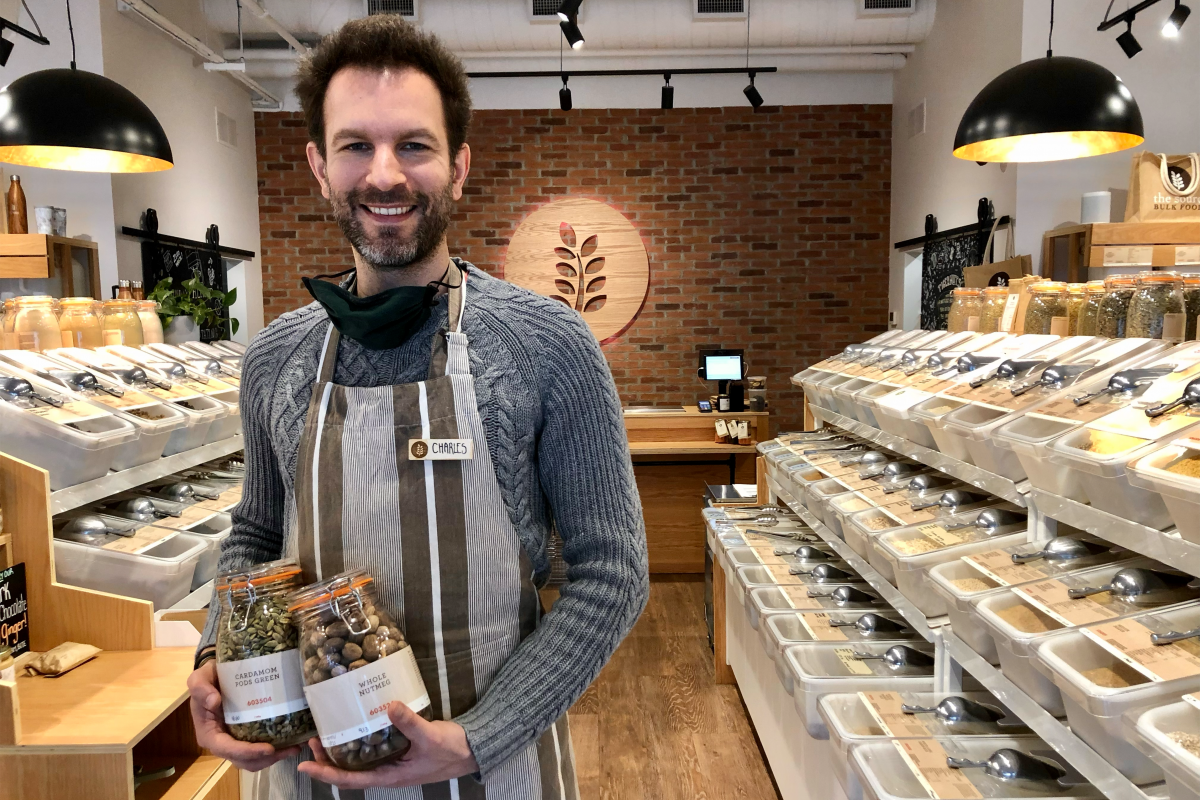
The scoop on Leslieville’s new zero-waste bulk foods shop

The Source is where conversations begin about sustainability and end with a giant bag of dark chocolate granola.


Most of us have our favourite places to go in Toronto. For me, one of them is Leslieville’s zero waste bulk foods shop, The Source.

More than a specialty bulk foods store offering a wide range of high-quality products, the shop is a source of inspiration and information for Toronto’s growing green community. There’s always a conversation about where our food comes from or how to substitute one type of product for another ‌to reduce our carbon footprint.

Open since October 2021, The Source already has its fair share of regulars who, like myself, are excited to join that conversation and fight climate change—one scoop at a time.

“We have a large extended family of regular customers who have elected The Source Bulk Foods as a natural extension to their kitchen pantry, and we love you all,” said Charles Peronnin, The Source’s Regional Franchise Partner for Eastern Canada.

From baking powder to bee pollen, it’s an eclectic pantry and home to over 450 bulk foods, including organic whole foods, cooking liquids and oils, healthy snacks and sustainable personal and household products. You’ll find just about everything at The Source, but you won’t find single-use plastic.

Charles explained the closer to home you can source a product, the easier and economically viable it is to move that product around without generating packaging waste.

Ye old circular economy is making a come back in Toronto

The Source works with small local food producers to get away from the fossil-fuel-driven ecosystems of food supply.

Until the plastics industry scaled up and explored the versatility of petro-chemicals circa World War II, the predominant supply infrastructure was a closed loop. Wooden crates and barrels, robust jute bags and glass bottles were integral to a circular economy, said Charles.

“In today’s economy and supply chain environment, the application of closed-loop systems is challenging,” he said, pointing to regulatory food hygiene constraints and transport logistics as two of many reasons. “Most suppliers just won’t play along, even if they wanted to.” 

Besides inspiring consumers, this zero-waste bulk foods shop hopes to influence other retailers and suppliers to push for more closed-loop systems since ‌the real shift needs to happen upstream.

A closed loop system has other benefits beyond environmental, including recycling local dollars into the local economy and supporting diversity in our local food systems.

6 zero-waste bulk products we promise you’ll love

1. Crickets – Yum. Or rather tasteless in my breakfast smoothie, but full of protein. Because of its neutral flavor, cricket powder can be used in a variety of recipes, including baked goods and salad dressings for an extra boost of energy.

2. Pomegranate Powder – I easily consume more than the “recommended” 2 litres of water a day with pomegranate powder from The Source. It’s like refreshing Kool Aid but for adults. Organic pomegranate powder contains both punicalagin and punicic acid–two antioxidants that are up to three times as effective as green tea. 

3. Bergamot All-Purpose Cleaner – Fill up your home with a beautiful bergamot fragrance every time you clean.

4. Lavender Mint Hand and Body Wash – Impressive. A little drop under running bath water  will fill your tub with a thick layer of bubbles and a magnificent aroma for a relaxing soak.

5. Mylk – Locally sourced, low-waste plant-based and closed loop, the shop’s plant mylk concentrates are the gold standard. Just mix the concentrate with water and shake it up for fresh plant mylk.

The guilty pleasure is all mine

Charles is fanatic about the Vanilla Malt Granola which comes from an East Toronto chef who bakes it on-demand in small batches.

No batch ever tastes the same.

“The difference in the richness of flavors between a freshly baked small batch granola and standard industrialized production is unimaginable until you’ve had the opportunity to taste the difference,” said Charles, describing the Vanilla Malt Granola as a journey through childhood. “It blew my mind the first time I ever tried it and, six months later, it continues to surprise and delight me nearly every morning.”

But that’s not his only guilty pleasure. While this zero-waste bulk foods shop offers brown paper bags for scooping, they encourage customers to bring in their own jars to fill up (or refill).

“One of my guilty pleasures is walking a regular customer through their first time carrying their own container,” said Charles. “At that point I know that we’ve convinced one more person to challenge their usual approach to food consumption, and possibly start forming new mindful shopping habits.”

A studio visit with artist and upcycler Robert Farmer

I’m watching the Simpsons on an overcast March afternoon before I go to see Robert Farmer in his studio. It seems fitting: with his pop-culture obsessions, penchant for the sacrilege, and 80’s inspired adolescent colour schemes, Rob seems like the kind of adult Bart Simpson would look up to.

I could say a lot about his background, but what I’ll say first is: Rob is a cool guy. He’s who you’d meet at a bar and have a totally unanticipated but welcome conversation about why the acid wash trend should’ve died 20 years ago. He has an infectious smile and a raucous laugh; it would be hard not to like him. Originally from Winnipeg, Manitoba, Rob reminds me a lot of the guys I grew up with in my own rural town. We’re living the same neighbohrhood, and he’s not afraid to tell me where the good coffee is, and where to never go. Mercury Espresso is a local favourite. Rob hosted a Hot Dog show inside for patrons and neighbours.

Robert is a self-made artist, with a few foundation courses from Emily Carr and Kootenay School of the Arts in Nelson, British Columbia. He used to work in computer illustration, but quit soon after he’d started. He tells me he was working too much and enjoying none of it. I ask him if he’d ever go back to it: “Absolutely not. I’d say: ‘Fuck you, there’s nothing you can pay me’.”

As I take in the space, I’m greeted by a pepto-bismol, Molly Ringwald Pretty in Pink corridor. He later tells me, “Pink is my favorite color. So I thought, why not paint the wall?” Robert Farmer is a house-painter by day, and canvas-painter by night. It’s pretty easy to see the connections between his two lines of work. There’s a perfect palette match between sakura blossoms, hearts and the Laura Ingalls Wilder style dress on an inquisitive looking kitten in his piece Lucky Charms and the wall. Rob tells me; “Sugar is the first drug we’re exposed to,” and I can’t argue with him.

Upcycling plays a major role in a Robert Farmer artwork. As I’m toured around the studio, I’m shocked by how many items Rob has managed to recycle, sometimes even twice. Even his drafting table is a curbside upcycle. Sanding pads from his painting jobs have been his latest effort, since he lives in an abundance of them. Little multiples sit on his wall, featuring middle America idols such as Beavis and Butthead, the Kool-Aid man, Hamburger Helper and the signature hotdog.

Value village canvases are also a favorite, with an otherworldly hotdog foregrounded on a J.M.W. Turner style landscape adorning one of his walls.

Collage using old scraps of comics, roadmaps, and whatever else Rob can get his hands on figure prominently in a portrait of Star Wars’ R2D2. Upcycling art came to Rob in the early stages of the pandemic, and has impacted his process ever since. Stores were closed, and Rob had to use what was immediately on hand. A lot of the time, this meant work materials, or just plain old recycling. He focussed on material exploration, using destroyed art books, comic books and acrylic transfers to get the effect. Rob tells me some of his experiments were just too weird to show. Coming from a man who paints bunny orgies, I had to take his word for it.

I ask Rob about his ideal day. He tells me, interspersed through other conversations:

Waking up to a warm summer day, I’m probably wearing shorts from my night out at the bar yesterday. I’m taking my bike and a beer to Cherry Beach. And I’m going dancing where I’m going to meet interesting people. I like music I can dance to.

I leave with a hotdog multiple in hand. Coincidentally, Rob catches me not two days later eating a hotdog on my work lunch. There’s something poetic about full circle endings.

Single-use plastic is pretty much invisible, until it’s not

The plastic waste spilled like milk across my kitchen floor, but I did not cry. 


Instead, the mountain of disposable containers collecting in my kitchen earlier this year filled my eyes with clarity and opened them to the insidiousness of single-use plastic. The issue for me isn’t how long single-use plastics take to decompose (hundreds of years), but how easily it gets into our homes. 


Hidden behind seductive brand names and attractive colours, single-use plastic is pretty much invisible — until it’s in a clear plastic recycling bag headed for the plastic blue bin. In my attempt to repurpose (upcycle/reuse) ALL the plastic packaging that snuck in, I realized some serious lifestyle changes were in order. The demand (I’m guessing) for my repurposed plastic butterfly strands and bleach hut bird houses – as cute as they are – will never be enough for the amount the plastic coming in, unless I make a conscious effort to change.

 After getting to know the various grades of single-use plastics housed in my kitchen cupboard, I concluded some are best off re-used in their present form, or as close to it as possible, than punched into to shapes. The less work involved, the better. Sunflower hummus containers became containers for hummus I made with chickpeas and my empty bottle of Palmolive dish soap went to Token in Riverside for a refill instead of the recycling bin. It delighted me recently to discover several stores in Toronto offer refill stations, which will tremendously cut down the amount of single-use plastic in my home. After loading up on shampoo at The Source Bulk Foods in Leslieville, I told my neighbour all about this trend (and tried, and failed, to give away a few plastic containers at the same time). 


Ultimately the solution requires a significant change in how we view single-use plastic. If you can see past the marketing, you may find it isn’t necessary at all. The next time you pick up a plastic bottle or container of ANYTHING, consider what alternatives are available.  Scrub your tub with baking soda and vinegar. Exfoliate with coffee. The abundance of options, likely already in your kitchen, might surprise you. 


As long as it’s cheap to produce and expensive to recycle, the world’s plastic problem will persist  – unless we pay attention and stop the demand for it. 

Secondhand shopping is a stylish solution to fast fashion

Fast fashion has no home in my carefully curated eco-friendly closet.
Ever since discovering the secondhand shop Petticoat Lane — downtown Cobourg in 1994 — I’ve had a passion for vintage fashion. The little shop smelled of mothballs but the ‘Three for 25 cents’ bin was irresistible with ‘new’ whimsical accessories and clothing every week: adorable cardigans, pre-loved Levi’s jeans and satin dresses straight out of the 70s. I was in love and spent so many hours digging and dreaming around Petticoat Lane. 


Second hand is stylish and sustainable
As a creative person, fashion has always been one way I’ve expressed myself, both consciously or unconsciously. By the end of high school, my closet was full of special second-hand pieces from shops around Cobourg, ON and Toronto. I also got used to receiving compliments on rare finds and weird looks from complete strangers. It fills me with so much satisfaction to share the insanely low price of a high-quality piece I just scored secondhand. I’ll then give you the name of the shop, directions, Insta handle. Whatever you need to get there. Vintage items are great conversation starters


Trading hard earned money for brand new clothes gives me an innate sense of remorse almost immediately after the transaction. It’s like paying for pine cones at the Dollar Store when they’re free in the park.


You are what you wear
My love of vintage clothing has become less about style (and budget) these days and more about sustainability. This shift happened around 2020 when I noticed brands like SHEIN popping up and advertising super cheap clothes all over the internet, primarily to super broke Generation Zs and Millennials. With more and more mainstream brands making poor quality pieces that are designed to go out of style in weeks, it’s no wonder the fashion industry is one of the world’s biggest polluters. This trend has been going on and getting worse since 2001 when outsourcing manufacturing to factories overseas and cheap labour became the norm thanks to globalisation (and greed). Fast or slow, new clothing production requires tons of water, electricity and land to grow materials. ‘You are what you wear’ should be the new, ‘You are what you eat.’ 


How to thrift like a pro
When Dana suggested last week that we go thrifting at Value Village, of course I was all in and then then remembered to write a list! If you don’t have a list before second hand shopping, you’re guaranteed to spend more than what you budgeted for and leave without what you went for. Here are a few more thrifting tips: 


  • Bring bags 
  • If you’re going to Value Village, donate something from your closet or kitchen for a discount 
  • Don’t go hangry 
  • Dress for undressing 
  • Learn how to discern quality 


As Dana and I looked through the aisles, along with other thrift shoppers, and talked about fashion, home decor and consumption, I felt the same sense of enjoyment I felt when I discovered Petticoat Lane. With climate change in the news and on everyone’s minds, second hand will no doubt be the first choice for more consumers in the future. I look forward to the day when wearing vintage is in vogue. Until then, I hope to let you know that SHEIN hauls are harmful to the planet and there’s nothing posh about that.

Eco-friendly products we love

This is where you can find K-media’s favourite planet-friendly products, sourced from independent shops around Toronto.

Safe for the planet skincare at Scout.
Beauty bars at Urban Bulk & Refill.
Calming candles at Good Neighbour.
A green way get rid of grime at Token.
Go plastic-free with Province of Canada

A sustainable hummus dip your veggies will love

The worst thing about sustainable hummus dip is, of course, that you have to make it. Prep stops me from cooking most things, most of the time. So cue hummus. This creamy, zesty Middle Eastern dip has filled my belly many an evening, with pretzels, and continues to. 


However, by mid-December, plastic containers of all kinds enraged me after a month-long attempt to repurpose anything polyethylene that entered my apartment. Cue insanity. Plus, at roughly $8 a week for two containers of hummus, it’s a snack that can add up to cost over $500 a year. 


From the lack of time involved to the ingredients you may or may not have, it turns out sustainable hummus dip is super easy to make at home. If I didn’t stop to make tahini or take 100 plus pictures, this hummus recipe would have required just five minutes to prepare.

Homemade Sustainable Hummus Dip Ingredients

  • 15 oz (1 can) of chickpeas 
  • 1 cup tahini 
  • 3 tbsp. water 
  • 3 tbsp. extra virgin olive oil 
  • 1 squeezed lemon 
  • 1 garlic clove minced 
  • 1 tsp. ground cumin 
  • 1 pinch of salt

Toasted sesame seeds plus olive oil equals tahini

Initially, this was going to be a tahini free hummus recipe because I didn’t have any tahini in my apartment, but then… I did! After looking up a simple swap, I remembered that I had, in the darkest corners of my baking cupboard, exactly what I needed: a cup of sesame seeds. No more, no less. No kidding.


To make tahini at home, toast your sesame seeds until golden, then place them in a food processor with a few tablespoons of extra virgin olive oil and voila. If by chance you do this backwards, like process the seeds, and then toast them with olive oil, it’s fine. I can report this firsthand and also tell you that sesame seeds, hulled or not, burn easily. Mine did after about five minutes when I increased the temperature and briefly decreased paying attention. 


Now, how to make our waste-free homemade hummus.

Instructions to make hummus at home

  • Place chickpeas, water, olive oil, lemon juice, garlic, cumin, and salt into your food processor and blend until smooth. 
  • Add additional water and/or lemon juice to thin out the hummus if needed. 
  • Add more salt, cumin or garlic can, depending on your preference. 
  • Store and cover in the refrigerator.

To be honest, halfway through making this sustainable hummus dip, my nose (thankfully) discovered the jar I’d labelled cumin was actually cinnamon, so I substituted the spice with another one that’s been in my cupboard for decades: curry. 


Like the sesame seeds, curry doesn’t go bad either. Both simply lose their flavour over time, but that wasn’t the case here. A zesty curried flavour lived on my tastebuds for a couple of hours after I put my DIY dish away.

A note about chickpeas

At the beginning of the pandemic, I started buying dried beans, lentils, and chickpeas in bulk (because behaving like a 17th century pioneer seemed like the thing to do). It’s also the thing to do if you want to save tons of money (not to mention space in your recycling bin). A $3.50 900g bag of chickpeas is equivalent to six cans of chickpeas, at least, don’t quote me, and 16 250g plastic containers of hummus.

How to hustle your hummus

After a tiny taste test to make sure my slightly over toasted tahini didn’t overpower the hummus, I wanted to share my waste-free recipe with friends in jars labelled with love and, shamelessly, my website. Not trying to take down big hummus here, but I do hope we can all figure out ways to cut down on our plastic consumption and reduce our carbon footprint. Big hummus is only a small example. By cutting out even half of our store-bought dips, or rather the roughly .4 oz plastic containers they’re typically packaged in, we could reduce our carbon footprint significantly. Upon returning from delivery, I received a text saying it was “yummy.” This pleasant surprise appeared despite, or maybe because of, the defects I outlined in a handwritten note with the hummus. 

We hope you watch this space for more “as waste-free as you can get recipes” that are as good for you and your friends as they are for the planet. If you have a favourite waste-free recipe, please share it with us in the comments below!

Digital marketing & website management by K-Media